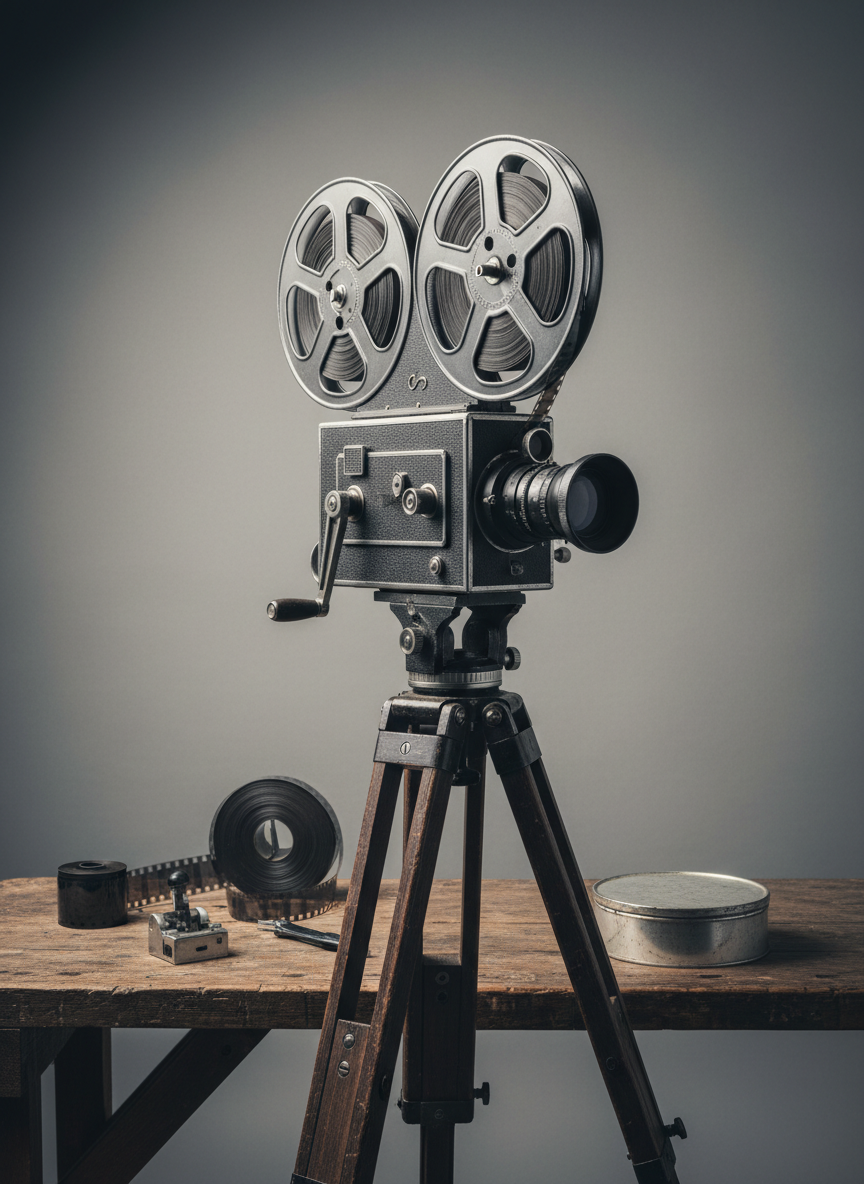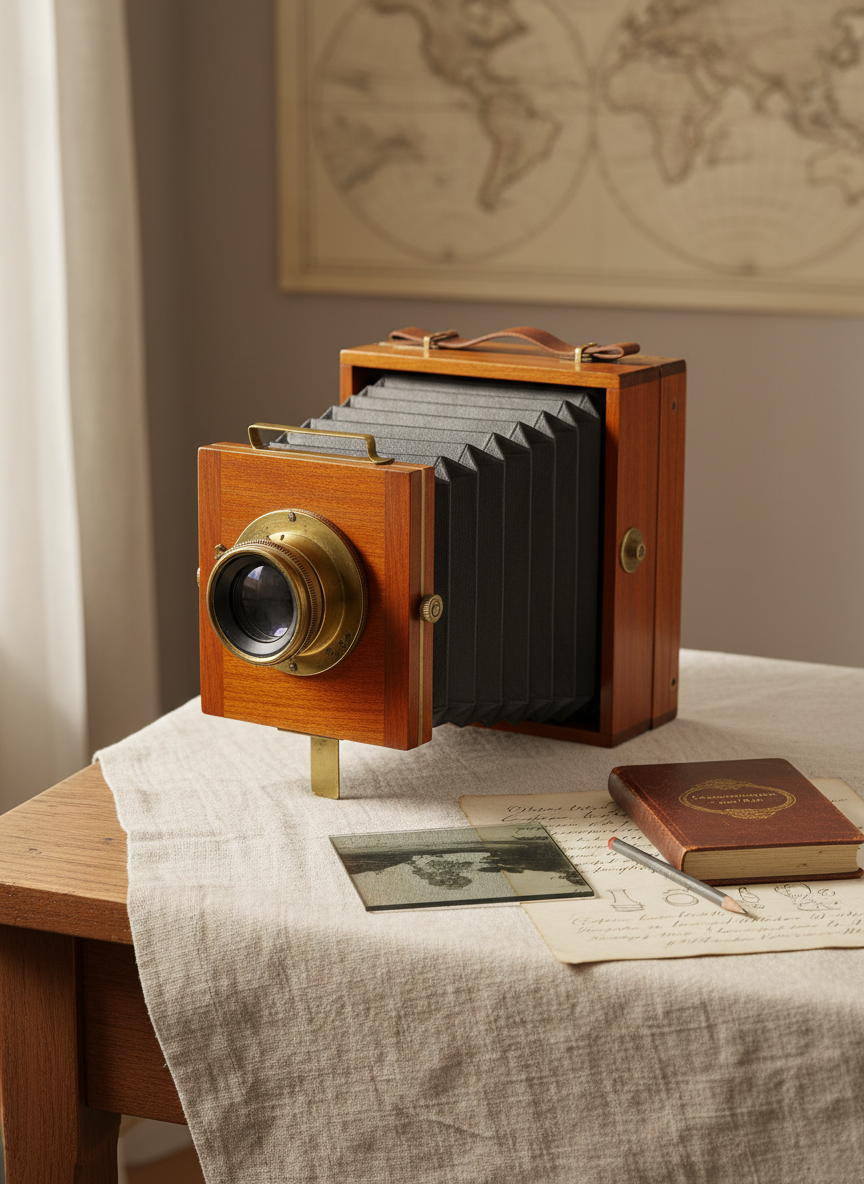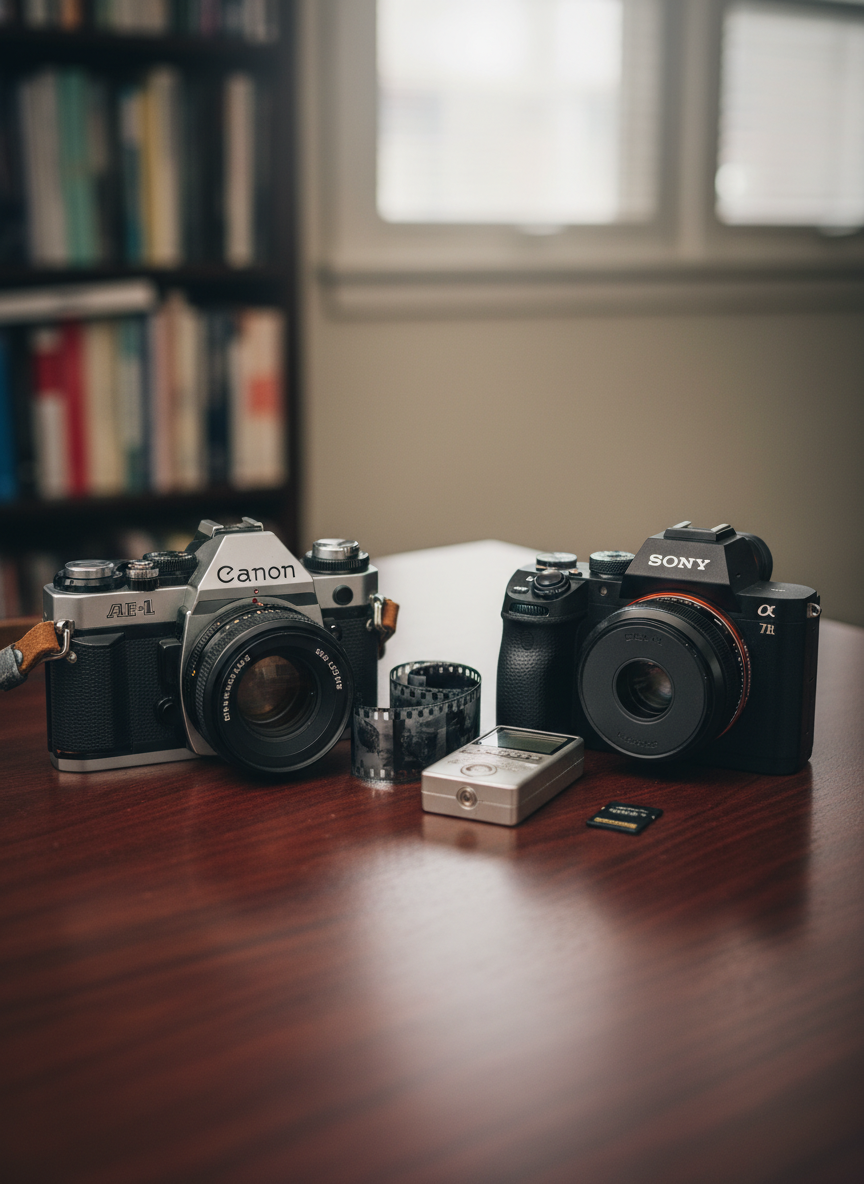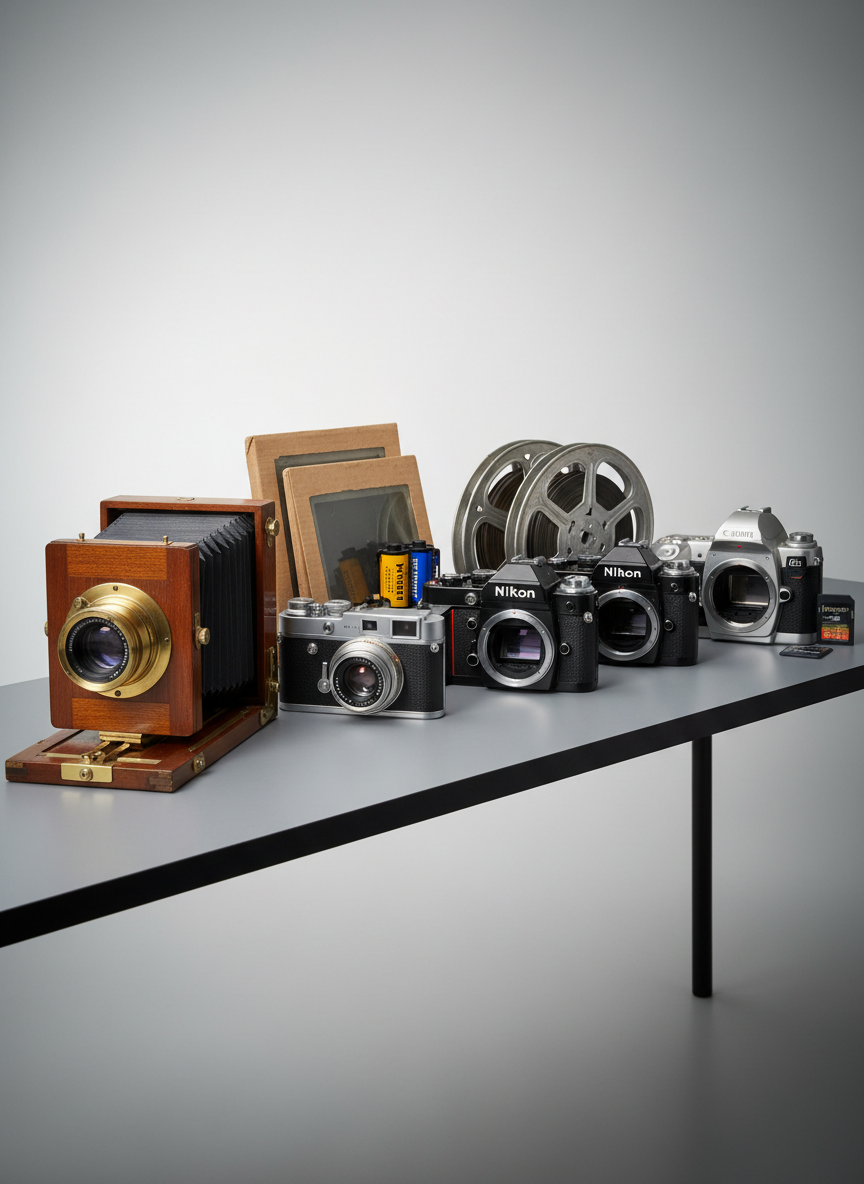
A chronological lineup of iconic film cameras and formats arranged on a long, neutral gray studio table, from a bulky 19th-century wooden large-format camera with brass lens, through a 35mm rangefinder and SLR, to an early digital camera body. Behind them, rolls of photographic film, motion picture reels, and a modern memory card are spaced neatly. Soft, even studio lighting from above and slightly to the side creates gentle reflections on metal and glass. Shot at eye level with sharp focus throughout, the background fades into a smooth gradient. The mood is educational and professional, conveying the evolution of imaging technology in a clean, photographic realism style suited for a research guide homepage hero image.

Core Technologies

Survey how film stocks, camera mechanisms, and digital sensors capture, control, and transform light into images.

Overview

This guide outlines fundamental concepts in imaging technology, including light-sensitive emulsions, lenses, shutters, film formats, and digital sensors, and helps you learn to compare systems, interpret technical specifications, and trace innovations across photographic and motion-picture history.
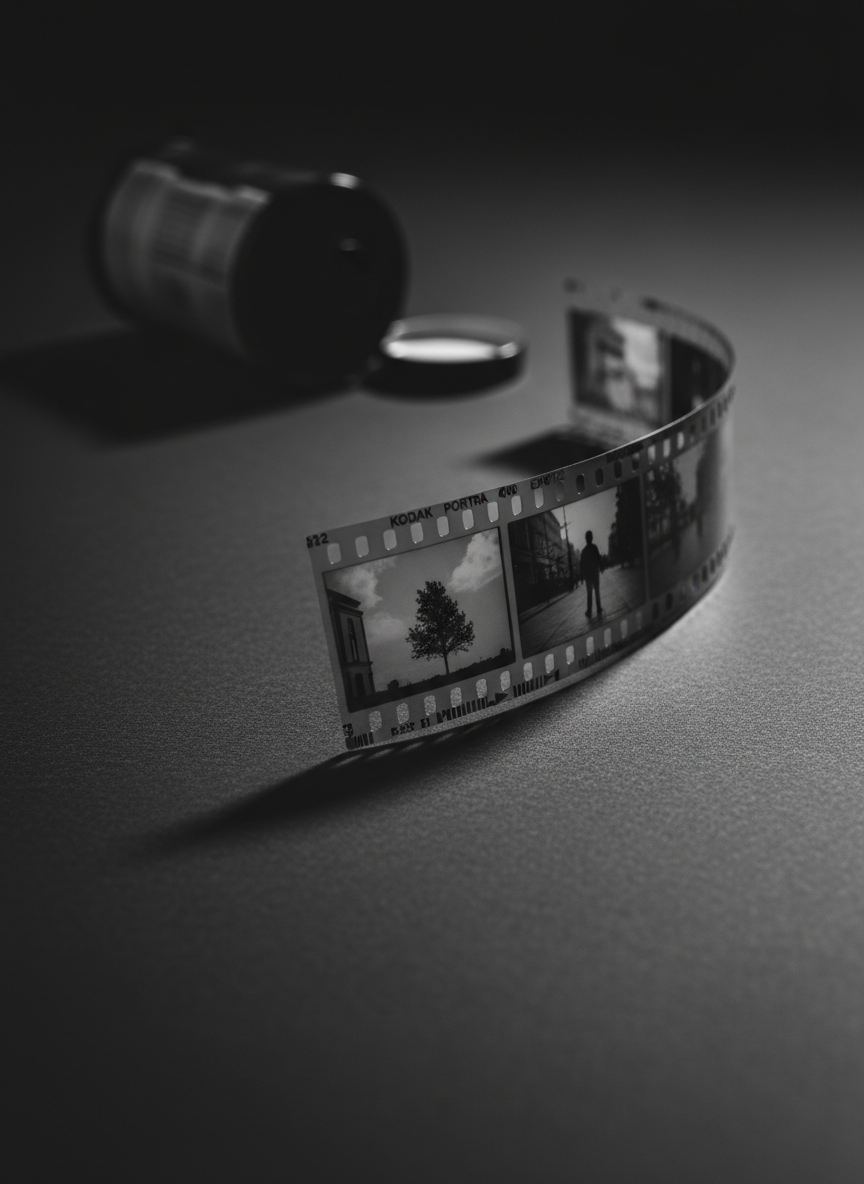
A close-up, highly detailed photograph of a strip of 35mm photographic film curling gently across a matte black surface. Individual frames with faint images are visible, along with crisp sprocket holes and fine edge markings. A metal film canister lies open in the background, softly blurred. Directional studio lighting from the right creates a subtle sheen on the film’s emulsion and casts a delicate shadow that accentuates its curve. Shot from a low, macro-like angle with very shallow depth of field, the composition feels precise and technical, ideal for illustrating the material properties of film stock in a research-oriented, professional context.
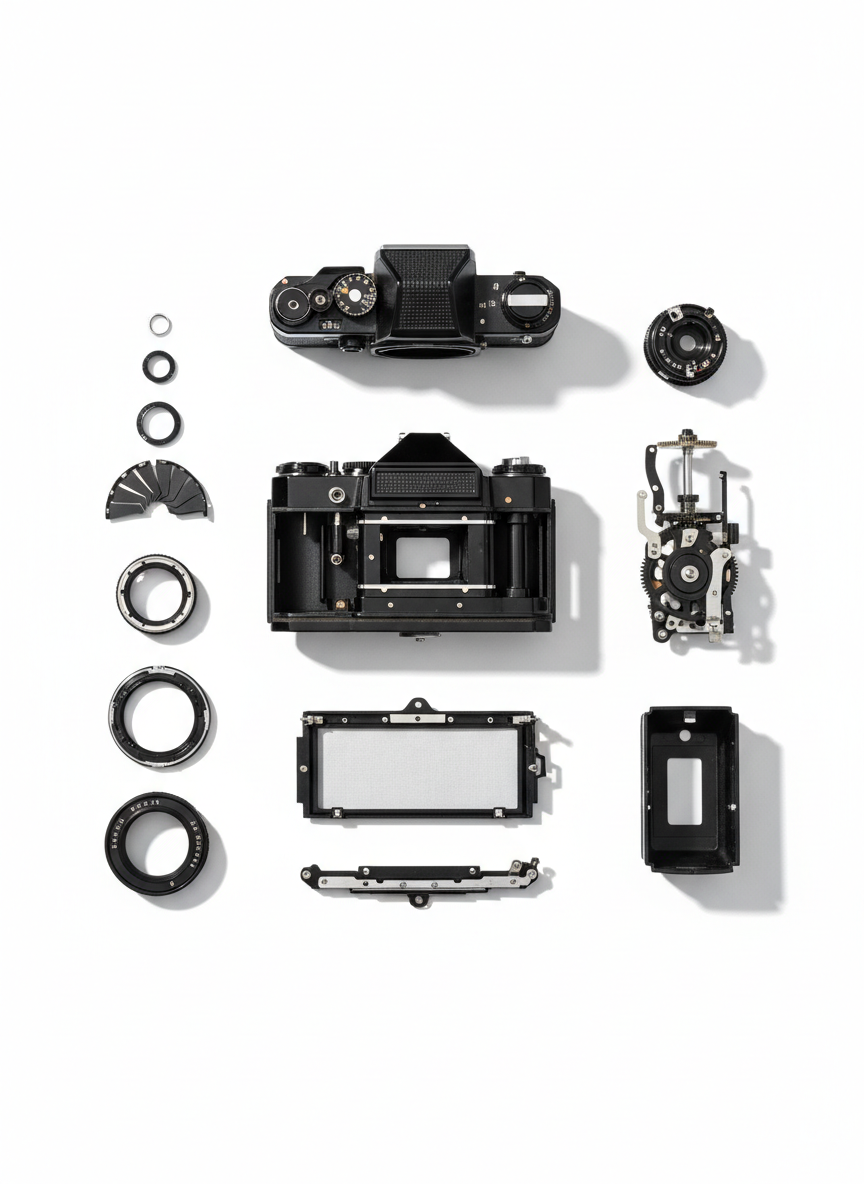
An exploded-view arrangement of a classic 35mm SLR film camera laid out on a clean white background, each component—lens elements, shutter curtains, mirror, film advance mechanism, body shell—carefully spaced to reveal inner workings. Thin, softly cast shadows from overhead, evenly diffused studio lighting help separate each part visually. The scene is shot from a perfectly top-down, bird’s-eye perspective with sharp focus across the frame, creating a technical, diagram-like feel while remaining fully photographic. The mood is analytical and educational, emphasizing mechanical precision and design evolution for students studying camera technology.

Key Processes and Components

Explore focused sections on emulsion chemistry, shutter and aperture design, lens optics, and CCD/CMOS sensor architecture to understand how each subsystem shapes image resolution, dynamic range, color rendition, and the creative possibilities of still and motion-picture cameras.