Tracing Film Camera History

Explore the evolution of film cameras, photographic film, motion picture technology, and digital imaging from the nineteenth century to today. This guide curates key scholarly resources to support research, teaching, and in-depth historical study.

About This Research Guide

Created for students, scholars, and enthusiasts, this guide organizes authoritative sources on film cameras and imaging technologies across technical, historical, and cultural perspectives.
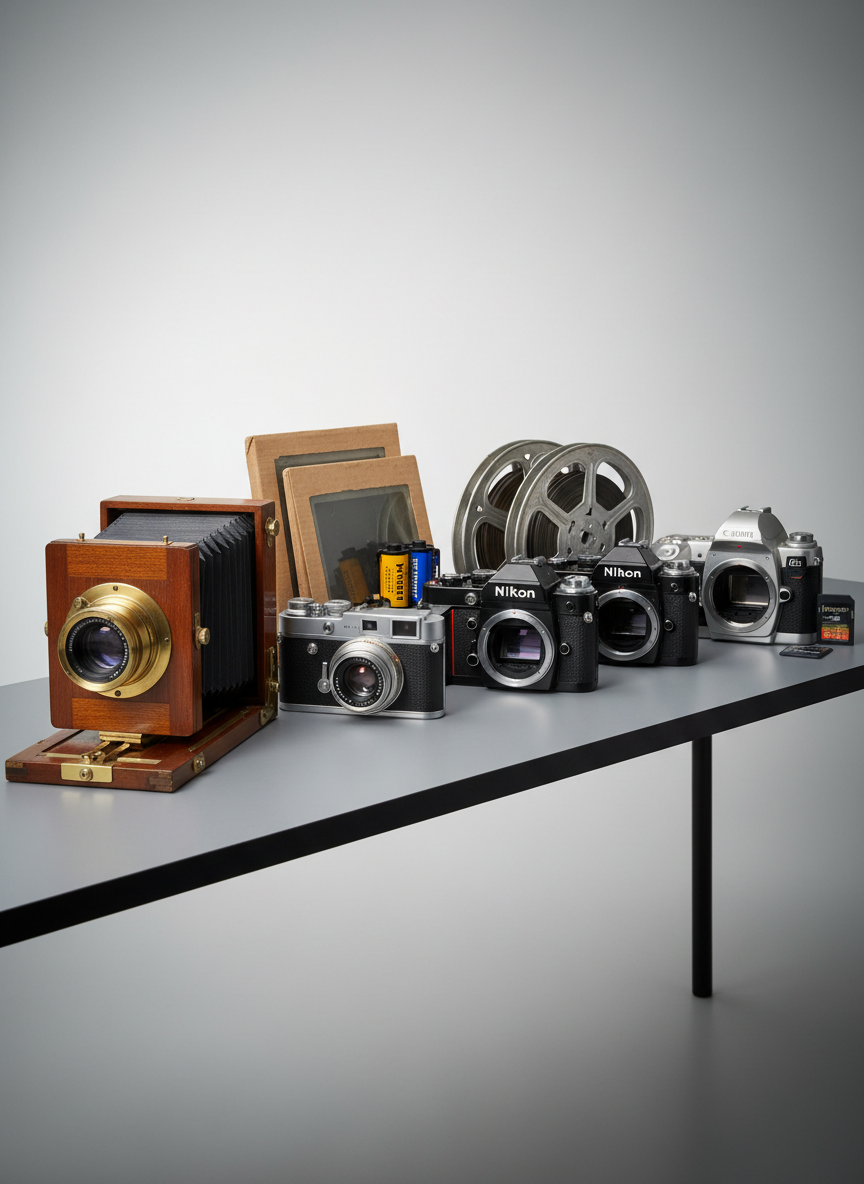
A chronological lineup of iconic film cameras and formats arranged on a long, neutral gray studio table, from a bulky 19th-century wooden large-format camera with brass lens, through a 35mm rangefinder and SLR, to an early digital camera body. Behind them, rolls of photographic film, motion picture reels, and a modern memory card are spaced neatly. Soft, even studio lighting from above and slightly to the side creates gentle reflections on metal and glass. Shot at eye level with sharp focus throughout, the background fades into a smooth gradient. The mood is educational and professional, conveying the evolution of imaging technology in a clean, photographic realism style suited for a research guide homepage hero image.
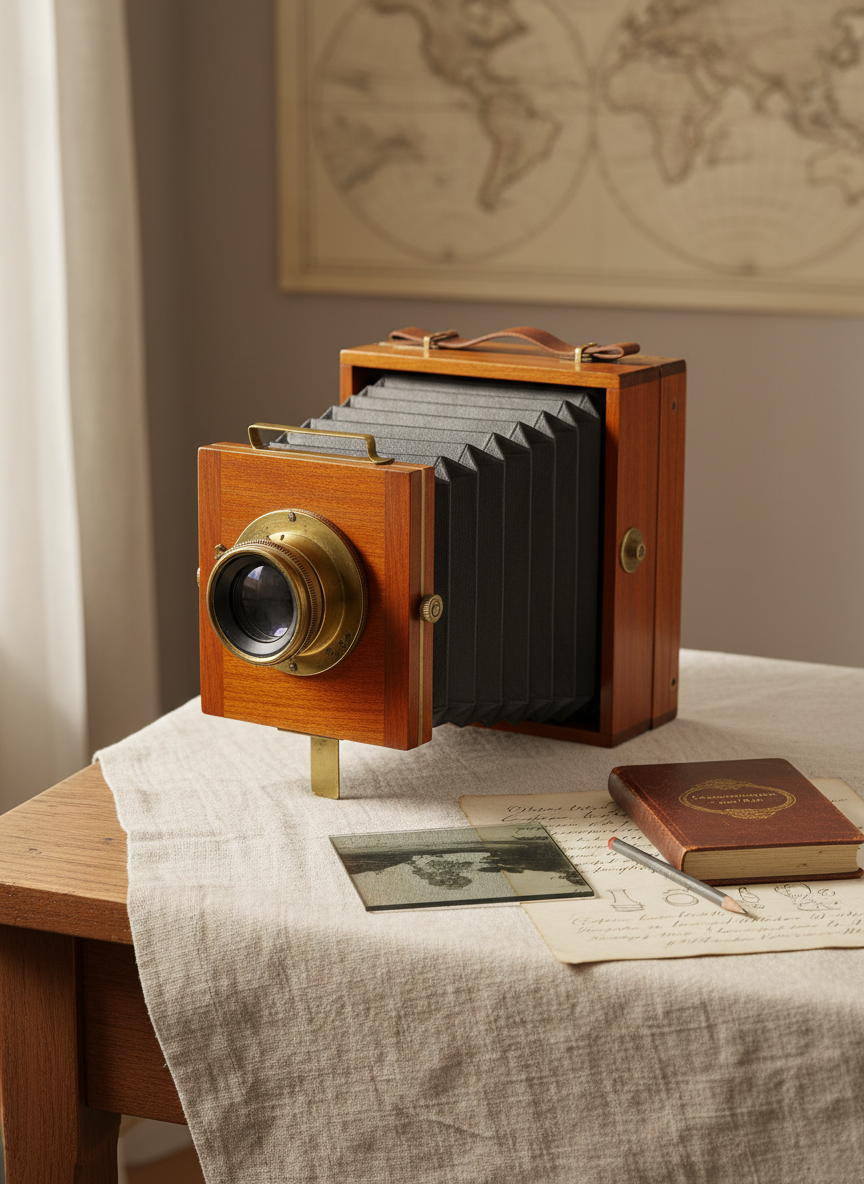
A meticulously restored 19th-century wooden box camera with a polished mahogany body, brass lens, and accordion-style bellows, positioned on a simple linen-covered table. Beside it, a glass plate negative and a small leather-bound notebook rest neatly, suggesting early photographic experimentation. Soft, diffused window light from the left highlights the wood grain and subtle tarnish on the brass fittings, casting delicate shadows. The background is a muted, out-of-focus studio wall with a hint of historical maps. Captured from a three-quarter angle with moderate depth of field, the composition is centered and calm, emphasizing historical detail in a professional, photographic realism style for educational use.
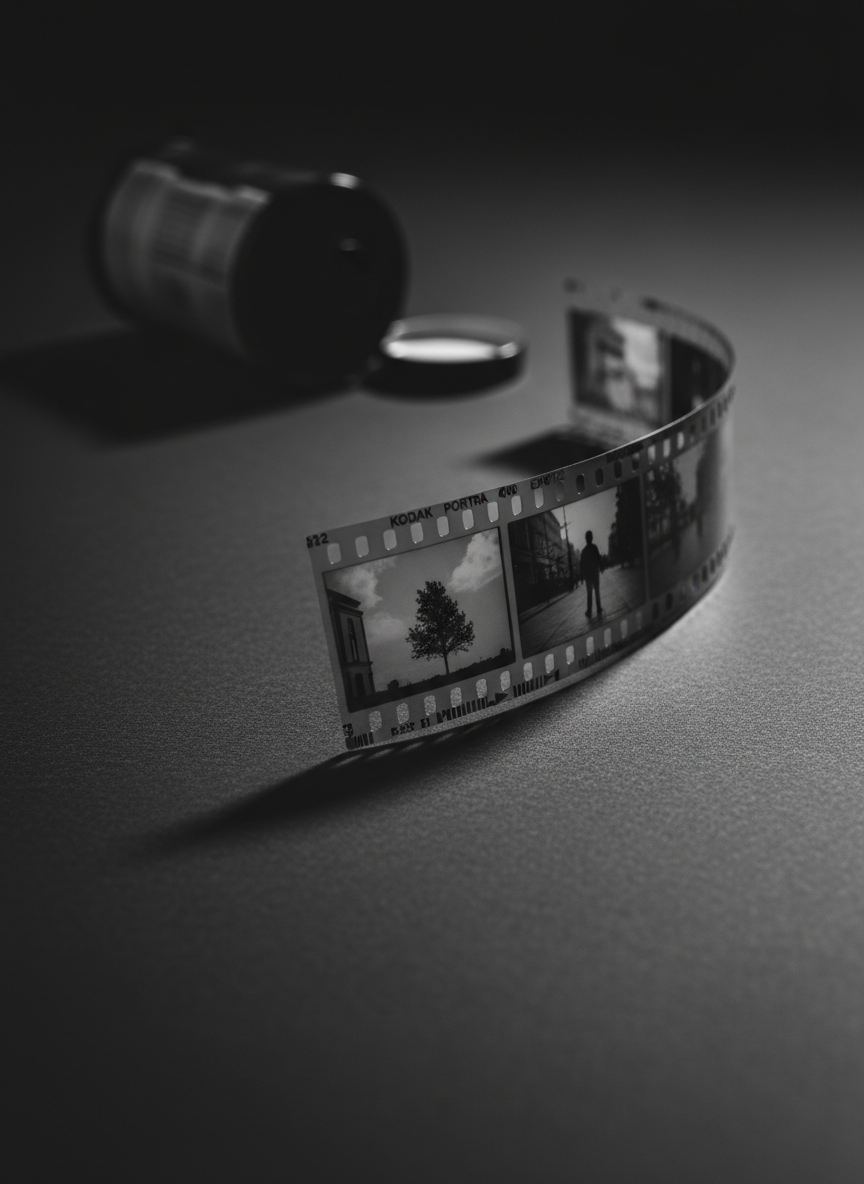
A close-up, highly detailed photograph of a strip of 35mm photographic film curling gently across a matte black surface. Individual frames with faint images are visible, along with crisp sprocket holes and fine edge markings. A metal film canister lies open in the background, softly blurred. Directional studio lighting from the right creates a subtle sheen on the film’s emulsion and casts a delicate shadow that accentuates its curve. Shot from a low, macro-like angle with very shallow depth of field, the composition feels precise and technical, ideal for illustrating the material properties of film stock in a research-oriented, professional context.
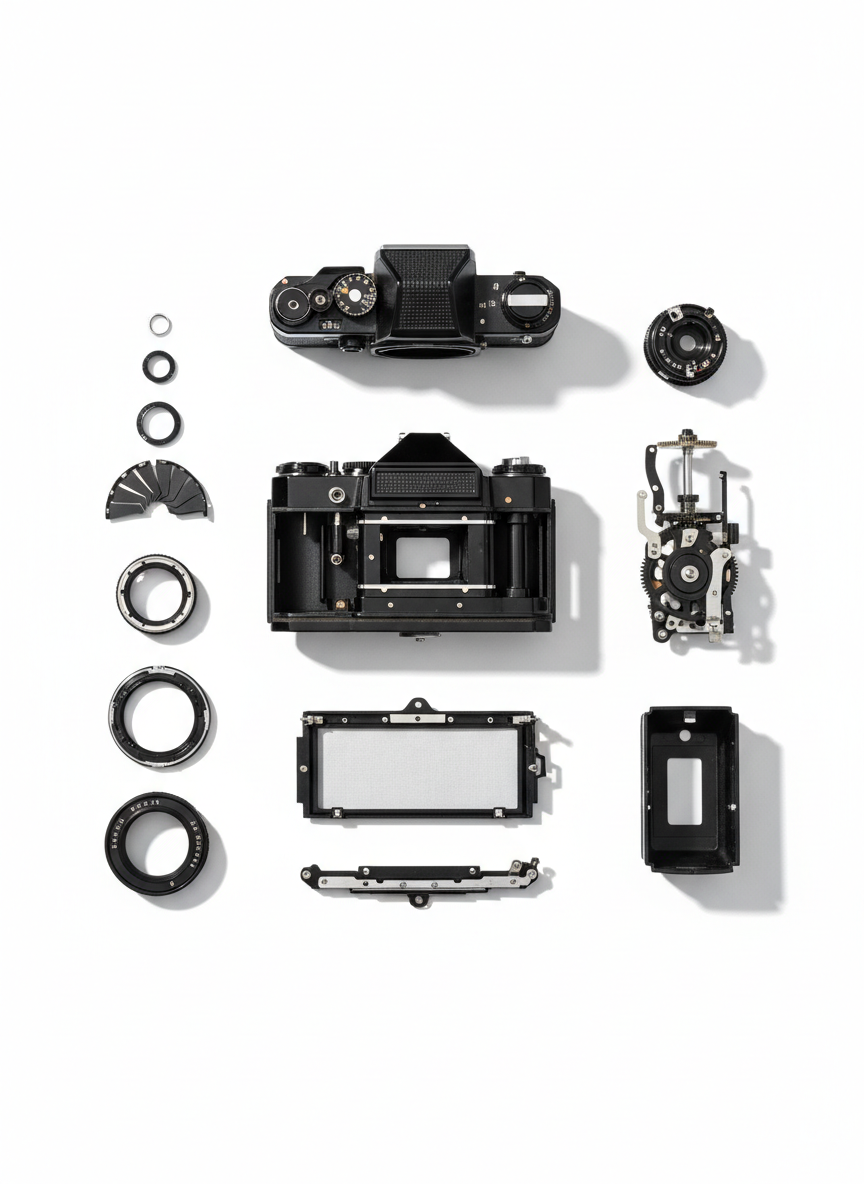
An exploded-view arrangement of a classic 35mm SLR film camera laid out on a clean white background, each component—lens elements, shutter curtains, mirror, film advance mechanism, body shell—carefully spaced to reveal inner workings. Thin, softly cast shadows from overhead, evenly diffused studio lighting help separate each part visually. The scene is shot from a perfectly top-down, bird’s-eye perspective with sharp focus across the frame, creating a technical, diagram-like feel while remaining fully photographic. The mood is analytical and educational, emphasizing mechanical precision and design evolution for students studying camera technology.
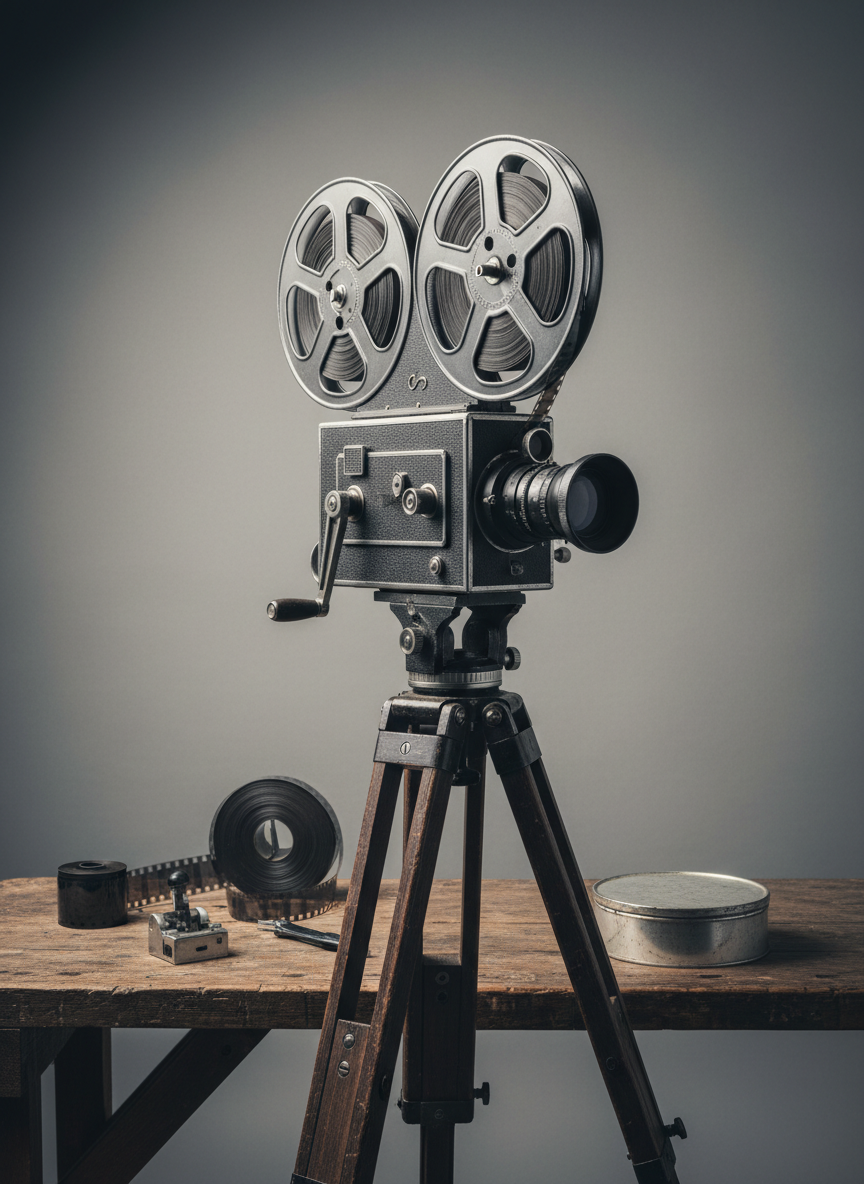
A vintage 16mm motion picture camera with a matte black metal body, winding crank, and dual film reels mounted on a sturdy tripod in front of a neutral backdrop. On the table beside it, a coiled 16mm film reel, a splicer, and a small reel can are neatly arranged. Soft, directional studio light from the upper left creates crisp highlights along the camera’s edges and subtle reflections on the reels, while the background remains gently blurred. Composed at a slightly low angle to give the camera a sense of importance, the image feels archival yet contemporary, perfect for explaining the history of motion picture equipment.
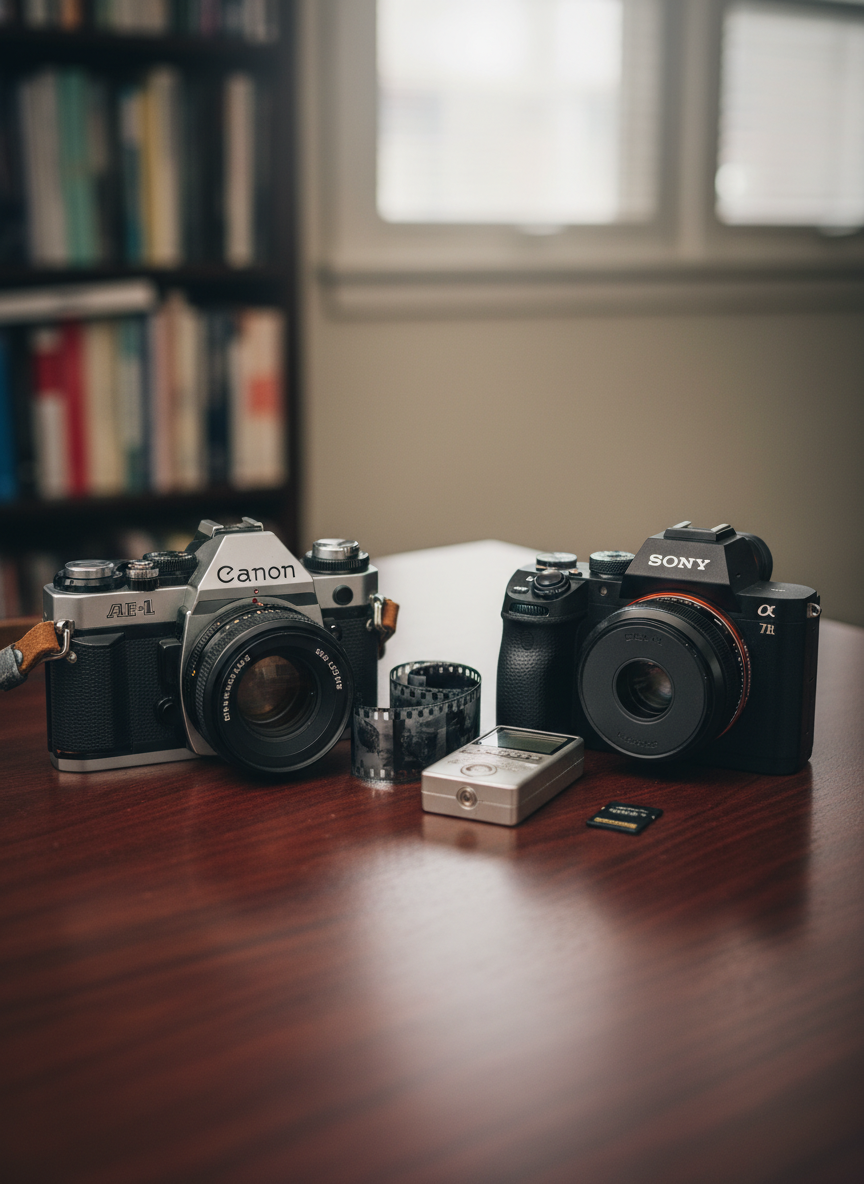
A carefully staged comparison scene featuring a classic 35mm film SLR camera on one side and a modern digital mirrorless camera on the other, both resting on a smooth, dark wooden desk. Between them lie a strip of developed 35mm film, a compact memory card, and a small light meter. Neutral, diffused studio lighting from above and slightly behind creates a soft halo effect, subtly separating the two eras. Shot at eye level with a shallow depth of field that keeps both cameras sharp while gently blurring the background, the composition uses rule of thirds to balance old and new. The mood is thoughtful and analytical, underscoring the transition from chemical to digital imaging.

Visit us

 7900 W. Division Street, River Forest, IL 60305

Hours

Monday–Friday, responded daily

Phone

847-363-3543